The hidden meaning behind Mazes and Labyrinths
- Mar 7
- 3 min read
You walk into a maze and something curious happens...you slow down, you pay attention and every turn matters...
For thousands of years, humans have built winding paths that twist, confuse and sometimes lead nowhere. At first glance they could look like puzzles or maybe garden entertainment.
But historically, mazes and labyrinths were never just games. They carried deeper meanings about life, choice and the human search for understanding.
Let’s step inside...

Two Paths: Maze vs. Labyrinth
Many people use the words Maze and Labyrinth interchangeably, but they are very different designs.
A maze is a puzzle. It contains multiple paths, dead ends and wrong turns. The challenge is figuring out the correct route.
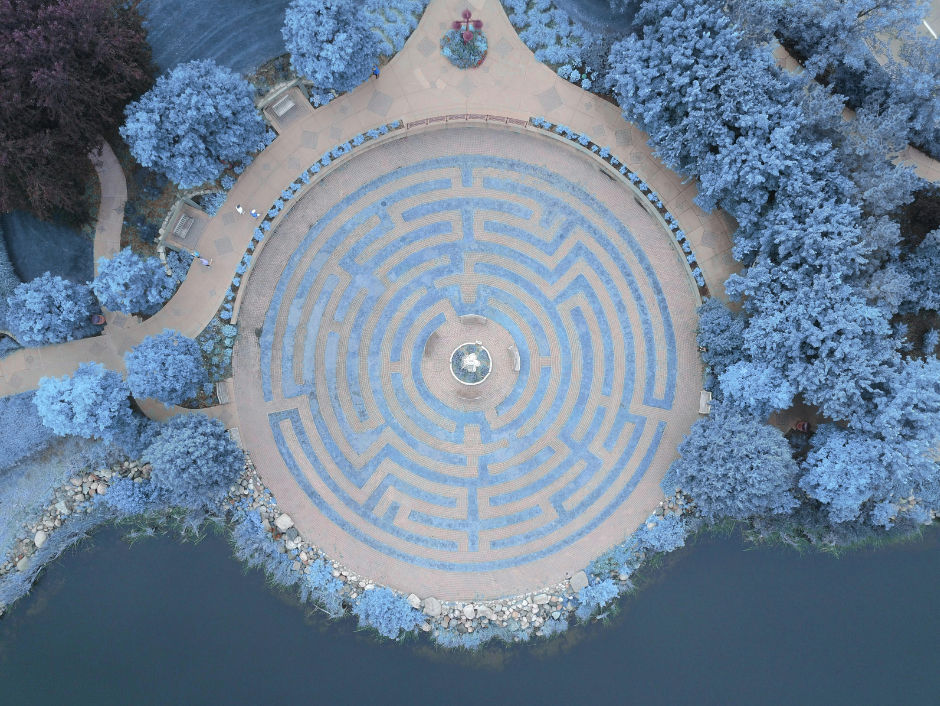
Whilst a labyrinth has only one path. It may twist and spiral, but it always leads to the center.
In other words:
Maze = problem to solve
Labyrinth = journey to experience
One tests strategy.The other invites reflection.
Ancient Symbols of the Human Journey
Labyrinth patterns appear in cultures thousands of years apart. The most famous example comes from ancient Greece, where legend tells of a labyrinth built to imprison the Minotaur.
But the symbol existed long before that story.
Early labyrinth designs have been found on:
Stone carvings in Europe
Ancient pottery
Temple floors
Coins and artwork
To ancient people, the labyrinth represented life itself.
The winding path symbolized how humans move through uncertainty. You cannot see the whole route at once, you simply keep walking, and eventually, if you persist, you reach the center.
Labyrinths in Cathedrals
During the Middle Ages, labyrinths appeared in many European cathedrals. One of the most famous is the labyrinth built into the floor of Chartres Cathedral in France around the year 1200.
Pilgrims would slowly walk the path as a form of meditation.
For those unable to travel to distant holy sites, the labyrinth walk symbolized a spiritual journey. Each turn represented patience, reflection and perseverance.
It was not about getting somewhere quickly.
It was about thinking while moving.
The Rise of Garden Mazes
By the Renaissance, mazes took on a new role.
European aristocrats built elaborate hedge mazes in palace gardens. These were playful, social puzzles designed to amuse guests and demonstrate wealth.
But even these carried symbolism.
Navigating a maze represented wit, intelligence and problem-solving ability. Finding the center meant mastering complexity.
In a way, they were early demonstrations of intellectual skill.

Why Humans Love Mazes
Modern psychology suggests our attraction to mazes taps into something fundamental.
Mazes activate several powerful cognitive processes:
Pattern recognition
Spatial reasoning
Problem solving
Curiosity
They create a clear challenge with a clear objective.
When your brain sees a problem, it immediately begins searching for the path forward.
And when you finally find the exit, your brain releases dopamine, the same reward chemical involved in motivation and learning.
That satisfying feeling is your brain celebrating discovery.
The Deeper Symbol - Labyrinth
Perhaps the most fascinating aspect of labyrinths is that they don’t trick you.
There are no wrong turns.
Yet the path still twists and doubles back. Sometimes it even leads away from the center before returning again.
This mirrors something deeply human.
Progress often feels like we are moving backward or getting lost, when in reality we are still moving forward.
The labyrinth reminds us that the path to understanding is rarely straight.
A Puzzle Older Than Civilization
From ancient mythology to cathedral floors to modern puzzle books, mazes and labyrinths have endured because they reflect something about how humans think.
We are creatures that seek direction. We want patterns. We want answers.
And sometimes the most meaningful discoveries come from simply continuing along the path...turn by turn.


